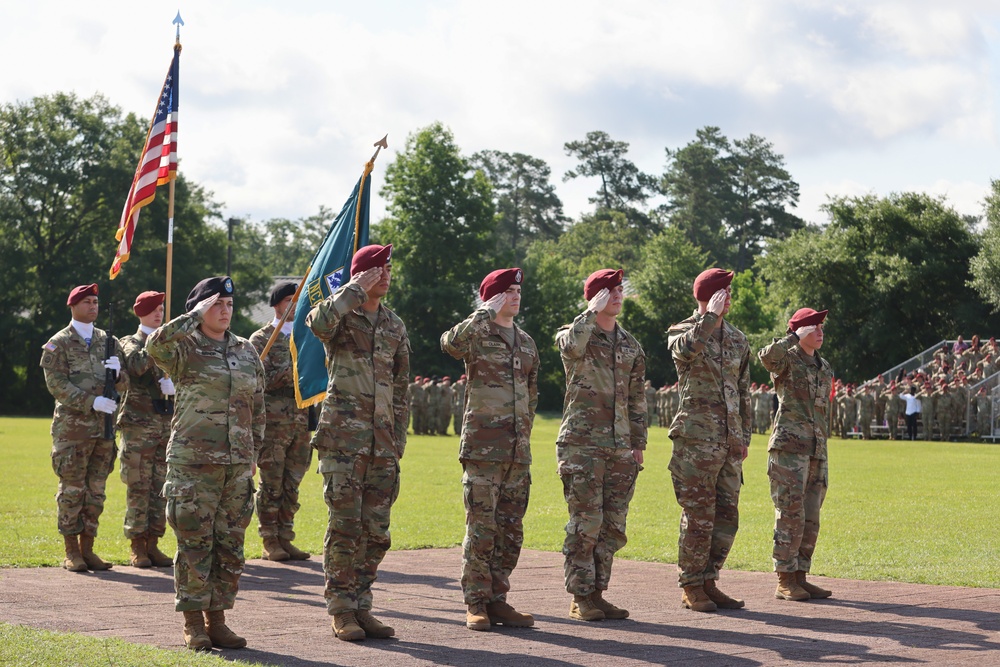
The U.S. Army reports that the 91st Civil Affairs Battalion is using Exercise Atlas Lion to test a new team design. Civil Affairs Soldiers work with civilian populations and information. They help commanders understand the human side of an operating area. The battalion is evaluating detachments of seven Soldiers, organized with one officer and six noncommissioned officers (NCOs).
That total of seven includes the officer. The article says Civil Affairs used a four-Soldier team model in the past. That model was built for counterinsurgency and village stability operations seen during the Global War on Terror. The Army says that smaller footprint becomes hard to sustain in large-scale combat against peer adversaries, which are enemies with similar military strength.
The article describes this as a pilot. One company is testing how the new detachments work together. It says the goals are added security, communications resiliency and analytical support. The source gives no date for adopting the structure, so readers should not treat it as a new Army rule.
Atlas Lion is also a baseline lethality event. Baseline lethality means every team can meet the same standard to fight and survive. The battalion commander says the exercise trains three baseline tasks: civil reconnaissance, civil network development and engagement, and civil information collection. He says shared standards give theater special operations commanders a similar capability from any detachment they request.
Evaluators put teams in high-stress, peer-conflict scenarios. Teams had to identify civilian points of friction and detect adversary influence networks. They also fed data into the targeting process while keeping themselves secure. In other words, the analysis work only counts if the team can survive to do it.
The detachment sergeant gives the clearest lesson for junior NCOs. He checks weapons, radio frequencies and medical equipment down the team line. He says basic soldiering skills become even more important in large-scale combat. He also stresses that battle drills must be ready at a moment's notice.
The article gives NCOs a major role. The detachment commander calls the NCOs the execution arm and says they do the analysis. One small note: the article says the detachment has six NCOs, while the commander mentions five. The source does not explain the difference.
For small-unit leaders, the takeaway is practical. Even a team with a specialized mission needs strong basics. Leaders might ask how their team checks weapons, radios and medical gear before a hard event. They might also ask which battle drills need more rehearsal.
This story is a single-unit example. It does not announce Army-wide policy, promotion rules or a final force structure. Its value is the discussion it can spark about standards, small-team roles and readiness. Soldiers can use those ideas without waiting for any larger change.
Source: U.S. Army: Beyond the Wire: 91st Civil Affairs Battalion sharpens baseline lethality at Fort Bragg. Published 2026-10-29.